The demand for professionally trained cleaners and housekeeping workers is increasing across the Gulf Cooperation Council (GCC) region, where hotels, hospitals, airports, shopping malls, commercial buildings, residential communities, industrial facilities and facility management companies require reliable and properly trained cleaning professionals. For Bangladeshi workers preparing for international employment, professional cleaner training in Bangladesh can provide practical knowledge and workplace skills before entering the GCC job market. Modern cleaning work is no longer limited to sweeping, mopping or basic housekeeping. Professional cleaners are expected to understand different surfaces, cleaning equipment, chemicals, safety procedures, personal protective equipment, hygiene standards, colour coding, cross-contamination prevention and standard operating procedures. This is why structured training is important for developing a workforce that is prepared for professional cleaning environments in the UAE, Saudi Arabia, Qatar, Kuwait, Oman and Bahrain.
At AMCO Skill Bangladesh (ASB), the objective is to develop practical, job-oriented skills that can support both local and international employment opportunities. AMCO currently lists Cleaning and Housekeeping among its career-oriented training departments and operates a 50,000+ sq. ft. training hub with multiple departments. The institute’s website highlights practical training, industry-grade tools, trade testing, certification and career-focused vocational education.
Why Professional Cleaner Training Matters for GCC Employers
Professional cleaning requires much more than basic knowledge of keeping an area clean. A cleaner working in a hotel may need to follow specific housekeeping procedures, while a worker in a hospital must pay close attention to hygiene, sanitation and contamination prevention. Cleaners working in airports, shopping malls, offices, factories and residential communities may also need to operate professional machines and use different cleaning products depending on the surface and environment. Without proper preparation, a worker may know how to perform basic cleaning but may not understand the professional procedures expected by an international employer.
This is why professional cleaner training in Bangladesh should focus on practical workplace skills, safety and professional discipline. Candidates should learn how to identify different surfaces, select suitable cleaning methods, use tools and machines correctly, understand chemical labels and dilution, wear appropriate PPE and follow workplace instructions. Practical training can also help workers become familiar with systematic cleaning methods so that they can complete tasks efficiently while maintaining consistent standards. For GCC employers, candidates who have received structured training may be easier to assess because their practical knowledge can be evaluated before recruitment.
The purpose of professional training is not simply to increase the number of workers available for overseas employment. The objective should be to develop workers who understand their responsibilities and can enter a professional environment with relevant skills. For that reason, the right approach is simple: Do not just send a cleaner. Send a skilled cleaner.
What Is Professional Cleaner Training?
Professional cleaner training is a structured process that prepares candidates for cleaning, housekeeping and facility management environments through practical instruction and workplace-focused skills development. Instead of learning only basic cleaning techniques, trainees are introduced to the correct use of equipment, cleaning products, surface-care methods, hygiene procedures, safety practices and professional housekeeping standards. This approach can help candidates understand why d
ifferent cleaning methods are required for different environments and why following a standard procedure is important for consistent results.
A good professional cleaner training program in Bangladesh should combine demonstrations with hands-on practice. Candidates should have opportunities to work with cleaning tools, machines and commonly used materials while learning how to complete tasks safely. Training should also introduce workplace discipline, professional communication and the importance of following instructions from supervisors. These skills can be valuable for workers planning to enter hotels, hospitals, offices, malls, airports, residential facilities, industrial sites and professional cleaning companies.
Key Areas Covered in Professional Cleaning Training
A complete cleaner training program in Bangladesh should cover the main activities that a worker may encounter in professional cleaning and housekeeping environments. The exact requirements can vary depending on the employer and workplace, but strong practical preparation normally includes surface care, equipment handling, chemical safety, hygiene, PPE, housekeeping procedures and workplace safety.
Floor Cleaning and Floor Care
Floor cleaning is one of the most common responsibilities in professional cleaning, but different flooring materials require different methods of cleaning and maintenance. A professionally trained cleaner should understand how to identify common surfaces and select an appropriate cleaning method, tool or machine. Training can include sweeping, mopping, scrubbing, stain removal, floor maintenance and safe operation of professional equipment. This knowledge becomes particularly useful in hotels, hospitals, shopping malls, airports, offices and other high-traffic facilities where floors need to be maintained regularly.
Professional floor care is also about maintaining appearance and protecting the surface. Using the wrong chemical, equipment or technique may damage a floor instead of cleaning it effectively. Through practical cleaning training in Bangladesh, candidates can develop a better understanding of systematic floor cleaning and learn why proper procedures are important for both cleaning quality and workplace safety.
Carpet Cleaning and Maintenance
Carpets require specific cleaning methods because dirt, dust and stains can become trapped within the material. Professional carpet cleaning may involve vacuuming, spot treatment, extraction and other techniques depending on the type of carpet and the requirements of the workplace. Workers need to understand how to use suitable equipment and cleaning products without causing unnecessary damage to the carpet.
For hotel, office and commercial cleaning workers, carpet care can be an important part of daily responsibilities. A properly trained cleaner should be able to follow the workplace’s cleaning procedure, use equipment correctly and maintain a consistent standard. This is one reason why practical housekeeping training in Bangladesh should include different types of surface and fabric care rather than focusing only on basic room cleaning.
Marble Cleaning and Polishing
Marble and other premium surfaces require careful cleaning because unsuitable products or techniques can damage the material. Professional cleaners working in hotels, commercial buildings, malls and high-end residential facilities may encounter marble floors, walls, counters and other decorative surfaces.
Training can help candidates understand the importance of selecting suitable cleaning products, using equipment correctly and following the recommended procedure for the specific surface. Proper marble maintenance requires patience, attention to detail and consistency, which are important qualities for professional cleaning workers. Certified Skilled Workers from Bangladesh for Saudi Arabia & GCC Projects | AMCO Skill Bangladesh
Tile Cleaning and Maintenance
Tile surfaces are widely used in kitchens, washrooms, corridors, offices, commercial buildings and residential facilities. Professional tile cleaning involves more than simply removing visible dirt. Workers may need to clean grout, remove stains, maintain hygiene and use suitable chemicals without damaging the surface.
A practical professional cleaning course in Bangladesh can introduce candidates to systematic tile cleaning procedures and help them understand how cleaning requirements change depending on the environment. These skills can be useful in hotels, hospitals, restaurants, offices and other facilities where tiled areas are cleaned frequently.
Kitchen Cleaning and Deep Cleaning
Professional kitchen cleaning requires a high level of attention because kitchens can contain grease, food residue, stains and areas that require frequent sanitation. Commercial kitchens in hotels and restaurants often follow scheduled cleaning procedures that include routine cleaning as well as deeper cleaning activities.
Workers should understand how to clean different kitchen surfaces, use appropriate cleaning materials and work safely around equipment. Professional cleaner training in Bangladesh can prepare candidates to understand the difference between ordinary cleaning and deep cleaning while reinforcing the importance of hygiene, safety and systematic work.
Washroom and Sanitary Area Cleaning
Washrooms and sanitary areas require careful cleaning because they are high-use environments where hygiene is particularly important. Professional cleaners need to understand how to clean toilets, sinks, floors, mirrors and other surfaces while following proper hygiene procedures.
Training should also address the importance of separating cleaning tools for different areas and preventing cross-contamination. These procedures can be especially important in hospitals, hotels, airports, shopping malls, offices and other facilities where large numbers of people use the same sanitary areas.
Glass and Surface Cleaning
Clean glass, mirrors and visible surfaces contribute significantly to the overall appearance of a building. Streaks, fingerprints, dust and residue can make an otherwise well-maintained facility look unprofessional. Professional cleaners therefore need to understand appropriate tools, cleaning solutions and techniques for different surfaces.
Practical training can help workers develop the correct habits for cleaning windows, glass doors, mirrors and other surfaces. It can also teach them to work safely when cleaning elevated or difficult-to-access areas according to workplace procedures.
Housekeeping Training for Hotels and Hospitality
Housekeeping is closely connected with professional cleaning, particularly within hotels and hospitality facilities. Housekeeping workers may be responsible for guest rooms, bathrooms, corridors, public areas and other sections of a property. Their work directly affects cleanliness, presentation and the experience of guests.
A strong housekeeping training program in Bangladesh should therefore cover room-cleaning procedures, bathroom cleaning, public-area cleaning, linen handling, hygiene, professional appearance, equipment use and workplace discipline. Candidates preparing for hotel and hospitality employment should understand that housekeeping is a structured professional role where consistency, attention to detail and time management are important.
For workers targeting GCC hospitality opportunities, practical preparation can help them become familiar with the type of disciplined work environment found in hotels and large facilities. Training cannot guarantee a job or visa, but it can provide candidates with relevant practical skills before they apply for employment.
Cleaning Equipment and Machine Operation

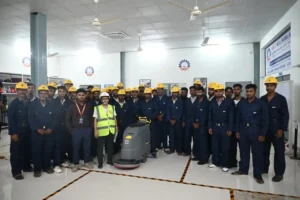

Modern cleaning operations often involve professional tools and machines rather than manual cleaning alone. Depending on the workplace, cleaners may use vacuum cleaners, floor-cleaning machines, carpet-cleaning equipment, polishing machines, spray equipment and other specialised tools.
Learning how to use equipment safely is therefore an important part of professional cleaner training in Bangladesh. Candidates should understand basic machine operation, safety precautions, cleaning procedures and appropriate care after use. A worker who knows how to use equipment correctly can work more efficiently and reduce the risk of damage to surfaces or machinery.
AMCO Skill Bangladesh describes its broader training approach as practical and industry-aligned, with practical labs and industry-grade tools used to develop hands-on skills.
Cleaning Chemicals, Dilution and Safe Chemical Handling
Chemical safety is another important area of professional cleaning. Different cleaning products are designed for different purposes, and the wrong chemical or incorrect concentration can damage surfaces or create workplace safety risks. Professional cleaners therefore need to understand chemical identification, safe handling, dilution and storage.
Candidates should also understand that cleaning chemicals should never be mixed randomly. Proper procedures, product instructions and workplace safety requirements must always be followed. Training in chemical handling can help workers become more confident and responsible when working with professional cleaning products.
International cleaning organisations also place strong emphasis on safe working, equipment use and correct dilution. For example, the British Institute of Cleaning Science (BICSc) includes health and safety, safe equipment use and correct dilution among the aims of its Licence to Practice training.
PPE, Workplace Safety and Hygiene
Cleaning workers can encounter chemicals, machines, wet floors, dust, waste materials and other workplace hazards. Personal Protective Equipment, commonly known as PPE, is therefore an important part of professional cleaning practice.
Training should help candidates understand when and how to use appropriate PPE, how to handle cleaning equipment safely and why workplace hygiene matters. A professional cleaner should understand that successful cleaning is not only about making a surface look clean; it is also about completing the work safely and responsibly.
Safety awareness can also help candidates adapt to structured workplace environments where employers expect workers to follow established procedures rather than relying only on personal habits.
Colour Coding and Cross-Contamination Prevention
Colour coding is widely used in structured cleaning systems to separate cleaning tools for different areas and reduce the possibility of cross-contamination. This can be particularly important in hospitals, kitchens, washrooms, hotels and other sensitive environments.
Candidates should understand the purpose of colour coding and follow the specific system used by their employer. Training can help workers understand why separate cloths, mops or other cleaning tools may be assigned to different areas. BICSc also identifies colour coding as part of its cleaning standards and best-practice resources.
Understanding these principles can help workers develop professional cleaning habits and become more aware of hygiene requirements in different workplaces.
Professional Cleaning SOPs and Workplace Discipline
Standard Operating Procedures, or SOPs, help cleaning teams perform tasks consistently. An SOP may specify which equipment should be used, which cleaning method should be followed, what safety precautions are required and what level of cleanliness should be achieved.
For workers entering GCC cleaning and facility management environments, understanding the importance of SOPs can be valuable. Employers need workers who can follow instructions, maintain discipline, complete assigned tasks on time and work consistently even when performing repetitive activities.
This is why a good cleaning training program in Bangladesh should not focus only on technical cleaning skills. It should also develop professional discipline, safety awareness and the ability to follow workplace procedures.
Professional Cleaner Training for UAE, Saudi Arabia and the GCC
The GCC includes major employment markets such as the United Arab Emirates, Saudi Arabia, Qatar, Kuwait, Oman and Bahrain. These countries have extensive hospitality, commercial, residential, healthcare and facility management sectors where cleaning and housekeeping workers may be required.
Bangladeshi candidates preparing for overseas employment can benefit from developing practical skills before entering the international workforce. Instead of arriving with only basic cleaning experience, candidates can develop knowledge of equipment, surface care, chemical handling, PPE, hygiene and professional housekeeping procedures through structured training.
However, candidates should understand that training does not automatically guarantee employment, recruitment or a visa. Actual requirements vary according to the employer, position, country and applicable employment regulations. The purpose of training is to make candidates more practically prepared and better able to demonstrate relevant skills. AMCO Skill Bangladesh – 50,000+ Sq. Ft. World-Class Training Center
Why GCC Employers Need Skilled Cleaners from Bangladesh
For a GCC hotel, facility management company, hospital, commercial property or professional cleaning company, recruitment is about more than finding someone who can perform basic cleaning. Employers need workers who can follow instructions, understand safety requirements, handle equipment correctly and maintain consistent cleaning standards.
A trained workforce can make the recruitment process more structured because candidates can be assessed against practical skills before employment. Training centres and employers can also communicate about the skills required for specific jobs and develop training programs that better reflect workplace needs.
This creates an opportunity for Bangladesh to supply not simply manpower but skilled cleaning manpower. When candidates receive practical training and assessment before recruitment, employers can gain a clearer understanding of their capabilities.
AMCO Skill Bangladesh: Cleaning and Housekeeping Training
AMCO Skill Bangladesh (ASB) is a technical and vocational training institute in Dhaka offering career-oriented training across multiple departments. The current AMCO website lists Cleaning and Housekeeping as one of its departments and highlights a 50,000+ sq. ft. training hub with 10+ departments.
The institute’s broader training model focuses on practical, industry-aligned education, practical labs, industry-grade tools, trade testing and certification. AMCO’s website also states that the organisation is ISO 9001:2015 certified and NSDA/BMET approved.
For candidates interested in cleaning and housekeeping careers, the training focus can include professional cleaning methods, housekeeping operations, surface care, cleaning tools, equipment, chemical awareness, PPE, workplace hygiene and safe working procedures. The aim is to help candidates develop practical skills that are relevant to real workplace environments rather than relying only on classroom theory.
Practical Skills for a Global Cleaning Workforce
The future of overseas workforce development should focus on practical skills, safety and professional standards. A cleaner who understands equipment, chemicals, surface care and workplace procedures may be better prepared for a structured facility than someone who has received no formal training.
For Bangladesh, this creates an opportunity to develop a stronger pipeline of skilled cleaning professionals for international employers. Training centres can work with employers and industry partners to understand the practical requirements of different workplaces and prepare candidates accordingly.
A successful workforce development model should connect training, practical assessment and employment requirements. When these three areas are aligned, candidates can become better prepared for the responsibilities of professional cleaning and employers can make more informed recruitment decisions.
GCC Employers Are Welcome to Connect With AMCO Skill Bangladesh
GCC hotels, cleaning companies, facility management organisations, hospitals, commercial property operators and recruitment organisations looking for trained cleaning and housekeeping manpower from Bangladesh can connect with AMCO Skill Bangladesh to explore workforce development opportunities.
Employers can learn more about the training environment, practical sessions, available equipment and assessment approach. Direct communication between employers and training organisations can also help identify the specific skills required for particular job roles.
AMCO Skill Bangladesh provides admissions and contact information through its website, including a dedicated admissions page for candidates and enquiries.
Building a Skilled Cleaning Workforce from Bangladesh
Bangladesh has an opportunity to develop a stronger international workforce by focusing on practical skills rather than manpower numbers alone. In the cleaning and housekeeping sector, that means preparing workers to understand cleaning techniques, professional equipment, chemical safety, PPE, hygiene, SOPs, colour coding and workplace discipline.
The goal should be clear: Do not just send a cleaner. Send a skilled cleaner.
Professional training can help candidates understand the responsibilities of modern cleaning work before they enter an international workplace. It can also help employers identify candidates who have received relevant practical preparation.
For GCC employers, this approach can support a more organised workforce-development pipeline. For Bangladeshi candidates, it can create a stronger foundation for pursuing cleaning, housekeeping and facility management careers.
What Makes a Professional Cleaner Different?
A professional cleaner is different from an untrained worker because professional cleaning involves knowledge, procedures and responsibility. A trained worker understands that every surface may require a different cleaning method, every chemical has a specific purpose, every machine must be operated safely and every workplace has procedures that need to be followed.
Professionalism also means arriving on time, maintaining personal hygiene, wearing appropriate PPE, respecting workplace property, following supervisors’ instructions and completing tasks according to the required standard. These qualities are particularly important in hotels, hospitals, airports and commercial facilities where cleaning staff are part of a larger professional team.
This is why professional cleaner training in Bangladesh should develop both technical ability and workplace discipline. The strongest candidates are not simply people who know how to clean; they are people who understand how to perform cleaning work professionally.
Frequently Asked Questions About Cleaner Training in Bangladesh
What is professional cleaner training in Bangladesh?
Professional cleaner training is a structured skills-development program that prepares candidates for professional cleaning, housekeeping and facility management work. Training can include floor cleaning, carpet care, surface cleaning, washroom cleaning, kitchen cleaning, equipment operation, chemical safety, PPE, hygiene and workplace procedures.
What does a professional cleaning course include?
A professional cleaning course may include floor cleaning, carpet cleaning, marble care, tile maintenance, kitchen and deep cleaning, washroom cleaning, glass cleaning, housekeeping operations, equipment handling, chemical safety, PPE, hygiene, colour coding and cross-contamination prevention. The exact curriculum can vary depending on the training provider and employer requirements.
Is cleaner training useful for GCC jobs?
Training can help candidates develop practical skills that are relevant to professional cleaning and housekeeping roles. It does not guarantee employment or a visa, but it can provide useful preparation before candidates apply for international jobs. http://Amcogroup.net
Which GCC countries can Bangladeshi cleaners target?
The GCC includes the United Arab Emirates, Saudi Arabia, Qatar, Kuwait, Oman and Bahrain. Employment opportunities and requirements vary according to the country, employer and specific job position.
Where can professionally trained cleaners work?
Professionally trained cleaners can work in hotels, hospitals, shopping malls, airports, offices, commercial buildings, residential facilities, industrial facilities, restaurants, cleaning companies and facility management organisations. Bangladesh’s Most Modern & Largest Welding Training & Testing Facility — Only at Amco Skill Bangladesh.
Does AMCO Skill Bangladesh provide Cleaning and Housekeeping training?
Yes. Cleaning and Housekeeping is currently listed as one of AMCO Skill Bangladesh’s training departments. The institute’s website also highlights practical training facilities and a 50,000+ sq. ft. training hub.
Does training guarantee a GCC job or visa?
No. Training can develop relevant skills, but employment, recruitment and visa approval depend on the employer, job position, candidate qualifications and applicable immigration and employment requirements.
Train Today. Work Professionally Tomorrow.
If you are a Bangladeshi candidate interested in professional cleaner training, cleaning training, housekeeping training or GCC employment, developing practical skills before applying for an overseas position can be an important step toward becoming workforce-ready. A structured training program can help you understand professional cleaning procedures, equipment, chemicals, safety, hygiene and workplace discipline.
If you are a GCC employer looking for professionally trained cleaners from Bangladesh, AMCO Skill Bangladesh welcomes communication with employers, recruiters and organisations interested in skilled workforce development.